Vintage Butterfly KDP Covers: A Designer's Review
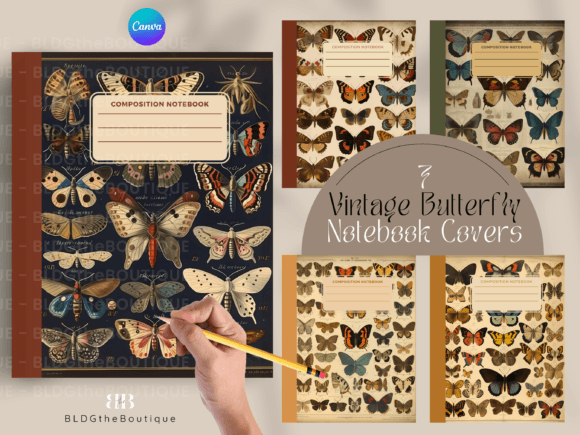
As a designer who spends half my life staring at stitch maps and the other half managing a small craft business, I approach new assets with a healthy dose of skepticism. When I first encountered the Vintage Butterfly KDP Notebook Covers, my initial reaction was curiosity mixed with caution. The product description clearly states this is a bundle of seven vintage butterfly composition notebook covers formatted in Canva for standard 7.5 x 9.25 inch books intended for Amazon KDP. On paper, this is a digital asset for low-content book sellers. However, in my line of work, we are constantly looking for fresh design assets that can be adapted into physical handmade products. The question I asked myself wasn't about selling notebooks, but whether these graphics could translate effectively into a machine embroidery design for custom apparel or home decor.
The Aesthetic Appeal and Visual Personality
The first thing that strikes you about this collection is the mood. These aren't the hyper-saturated, cartoonish butterflies often found in clip art libraries. They possess a muted, nostalgic quality that feels incredibly current. The "vintage" aspect suggests faded botanical illustrations, which translates beautifully to thread work. In embroidery, we often struggle with designs that look too digital or sharp; these graphics have a natural softness that mimics the texture of satin stitch and fill stitch work even before a needle touches the fabric.
The layout of the composition notebook style provides a built-in frame. For an embroiderer, this is gold. It offers a clear boundary for placement, whether you are working on a large tote bag design or a smaller pocket detail on a shirt. The theme leans heavily into cottage-core and academic nostalgia, two markets that are exploding right now among Etsy sellers and boutique owners. If you are looking to create a cohesive brand identity, these seven variations offer enough consistency to build a collection without feeling repetitive.
Real-World Application: From Screen to Stitch
To truly evaluate the potential of these Print Templates and Graphics, I mentally ran through a recent client request. A local boutique owner wanted a line of limited-edition aprons and kitchen towels for a spring market. She needed something that felt handmade but sophisticated. This is where the Vintage Butterfly KDP Notebook Covers could shine if adapted correctly.
Imagine taking one of the butterfly illustrations from the bundle, isolating it in your vector software, and converting it into an embroidery file. Placed on the lower corner of a linen apron, the vintage aesthetic would pop against a natural fabric background. Because the original graphics are designed for book covers, they are likely high-resolution enough to trace for digitizing. The result would be a finished product that looks like a custom illustration rather than a generic stock image.
Beyond apparel, consider the potential for embroidered patch creation. The distinct shapes of the butterflies would hold up well as iron-on patches for denim jackets or canvas backpacks. For baby embroidery projects, the softer color palettes inherent in vintage designs are perfect for nursery decor items like pillow covers or blanket accents. The key here is versatility; while the source material is for KDP books, the visual language speaks to anyone creating personalized gifts or small shop products.
Navigating Technical Challenges in Embroidery
However, moving from a Canva template to a stitched reality requires careful planning. Since these are originally Print Templates, they are not pre-digitized digital embroidery files. You cannot simply load them into your machine. You must digitize them yourself or hire a professional. This is a crucial distinction for craft business owners who might assume the download includes stitch data.
When digitizing these butterflies, pay close attention to stitch density. Vintage illustrations often rely on fine lines and shading. If you replicate every tiny detail with running stitch or dense fills, you risk creating a stiff, cardboard-like feel on the fabric. For wearable items like sweatshirt embroidery or custom apparel, you need to simplify the details. Focus on the silhouette and the main wing patterns, letting the thread texture do the work of shading.
Fabric choice is another critical factor. These designs would struggle on highly textured fabrics like thick terry cloth or loose-weave linens unless you use a heavy cut-away stabilizer. The fine details of a vintage butterfly can get lost in the nap of a fleece hoodie. Conversely, on smooth cotton or poly-blend twill, the clarity of the design would be exceptional. Be wary of using these on dark fabrics unless you plan for a full underlay or an applique approach, as the vintage colors may not provide enough contrast on their own.
Commercial Viability and Brand Consistency
For the creative entrepreneurs out there, the value of this bundle lies in its ability to create a recognizable brand aesthetic. If you sell holiday embroidery gifts or wedding favors, having a set of seven coordinating designs allows you to offer variety while maintaining a unified look. Customers trust brands that feel curated. Using these butterflies across different products—say, a matching set of tote bags and notebook covers—creates a powerful visual story.
It is vital, however, to check the licensing terms carefully. Just because a graphic is available for KDP use does not automatically grant rights for physical merchandise or embroidery digitization. Always verify if the license covers commercial embroidery projects before investing time in digitizing and selling the final stitched goods. Assuming rights can lead to serious legal issues for your craft business.
Final Verdict for the Maker
In conclusion, the Vintage Butterfly KDP Notebook Covers are a treasure trove of inspiration for the resourceful designer. While they are marketed specifically for Amazon KDP sellers, their true potential for the embroidery community lies in their adaptability. They offer a sophisticated, retro vibe that is difficult to find in standard clip art.
My advice? Treat these as your starting point, not the finish line. Test your digitized versions on scrap fabric first. Check how the thread colors interact with your chosen material. Experiment with different hoop size placements to see what feels balanced. Whether you are making a personalized gift for a friend or building inventory for your online store, these graphics have the bones to support a stunning embroidery project. With the right technical execution and a keen eye for fabric compatibility, you can transform these digital book covers into tangible, high-value textile art that customers will love.