Master Monogram: A Bold Circle Font for Real Embroidery Projects
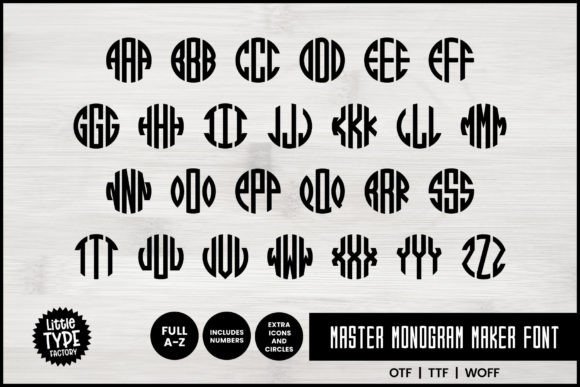
As a designer who spends more time at the hoop than away from it, I am always skeptical of new font releases until I see how they actually stitch out. We have all downloaded a digital embroidery file that looked perfect on the screen but turned into a bird's nest of thread on the fabric. That is why I took a close look at Master Monogram. This isn't just another decorative script; it is a circle monogram font generator style designed specifically for logos, icons, and emblems where three characters are required. The recent addition of a special round block style that accommodates an ampersand or plus sign immediately caught my attention for its versatility in modern branding.
First Impressions: Structure and Visual Personality
When I first loaded the preview of Master Monogram, the immediate takeaway was its structural integrity. In the world of Display fonts for embroidery, balance is everything. Many circular monograms suffer from awkward spacing when the letters curve around the perimeter, but this design maintains a consistent visual weight. The "round block" aesthetic gives it a contemporary, almost collegiate feel without being overly sporty. It feels substantial. For a craft business owner, this is crucial because the font needs to look professional whether it is stitched in gold thread on a navy blazer or white thread on a canvas tote.
The layout naturally draws the eye to the center, making it an ideal candidate for initial-based logos. The inclusion of the ampersand option opens up possibilities for couple gifts or partnership branding, which is a niche many Etsy sellers try to capture during wedding seasons. The mood it creates is one of established reliability. It doesn't scream for attention with unnecessary flourishes; instead, it commands respect through clean lines and geometric precision.
Real-World Application: The Custom Tote Test
To truly evaluate this machine embroidery design, I decided to simulate a real client request: a set of custom tote bags for a local boutique opening. The client wanted something that would look good on heavy canvas but also translate well to smaller items like key fobs later on. I chose Master Monogram for the main logo placement.
Stitching this onto a textured canvas tote revealed a lot about the design's adaptability. The block-style lettering held up exceptionally well against the rougher fabric texture. Unlike delicate scripts that can get lost in the weave of a coarse material, the solid forms of this font popped with clarity. I used a standard satin stitch approach for the outer ring and a dense fill stitch for the characters. The result was a crisp, high-definition emblem that looked like it belonged there. It elevated the perceived value of the handmade product instantly, turning a simple bag into a piece of boutique merchandise.
I also considered how this would perform on custom apparel, specifically a heavyweight sweatshirt. The circular shape conforms nicely to the chest area without looking distorted by the garment's seams. For baby embroidery, such as on a receiving blanket or onesie, the rounded edges of the font are safe and soft, avoiding the sharp points that can sometimes snag on delicate skin or tiny fingers.
Navigating Fabric Challenges and Stitch Density
While Master Monogram is robust, no design is immune to the physics of thread and fabric. When working with stretchy fabrics like jersey knits for t-shirts, the density of the fill stitches becomes a critical factor. If the stitch density is too high, the fabric may pucker, distorting the perfect circle into an oval. My advice is to always test on scrap fabric first. If you are stitching on a thin material, a high-quality cut-away stabilizer is non-negotiable to maintain the structural integrity of the round block shapes.
Curved surfaces present another challenge. If you are applying this to a cap, the curvature of the front panel can compress the bottom letters of the circle. You may need to adjust the pull compensation or slightly elongate the design vertically in your editing software before stitching. Additionally, be mindful of very small hoop size limitations. While the design is scalable, shrinking it too much for a tiny patch might cause the inner details of the ampersand or the spacing between the three characters to merge. Always check the minimum recommended size provided with the embroidery file.
Commercial Viability and Brand Consistency
For small shop product lines, consistency is key to building brand recognition. Master Monogram offers a level of professionalism that helps establish trust with buyers. Whether used for holiday embroidery gifts like ornament tags or as a permanent logo on embroidered patches, the design remains legible and attractive. Its versatility allows it to serve as a primary brand mark or a secondary decorative accent.
From a sales perspective, this font performs well in printable mockups and digital previews. The clean geometry photographs beautifully, which is essential for online listings where customers cannot touch the product. High contrast in photos—such as white thread on dark fabric—showcases the definition of the block letters, driving higher buyer engagement. However, remember to verify the licensing terms. Just because a font is labeled as Fonts or Display category does not automatically grant commercial rights. Confirm whether you can sell the finished product or if the license extends to selling the digital design assets themselves.
Final Designer Notes for Success
Before committing to a production run with Master Monogram, here are a few practical steps to ensure success:
- Thread Color Contrast: Test the design in both light-on-dark and dark-on-light scenarios. The block nature of the font relies on silhouette clarity.
- Density Check: Inspect the stitch count relative to your machine speed. Dense areas may require slower stitching to prevent thread breakage.
- Detail Inspection: Zoom in on the ampersand or plus sign connections. Ensure these small bridges are wide enough to stitch out cleanly without breaking.
- Fabric Compatibility: Avoid using this on highly textured loops like Terry cloth unless you use a water-soluble topping to prevent sinking.
- Wash Testing: Since this is likely for personalized gifts or apparel that will be washed, verify that the stabilizer and thread choices hold up after multiple cycles.
In conclusion, Master Monogram is a reliable workhorse for the modern embroiderer. It bridges the gap between classic monogramming and modern logo design. By understanding its strengths in structure and being mindful of its requirements regarding stabilizers and fabric types, you can create commercial embroidery projects that stand out in a crowded market. It is a tool that, when used with intention, adds genuine value to every item it touches.